Piping & Pipeline Materials
Piping & Pipeline Materials
Carbon Steel
Features:
High tensile strength and durability.
Cost-effective for large-scale applications.
Handles high-pressure and moderate temperature environments.
Advantages:
Readily available and customizable for various pipe sizes.
Compatible with protective coatings to enhance corrosion resistance.
Common Applications:
Transporting crude oil, natural gas, and refined products.
Onshore and offshore pipelines.
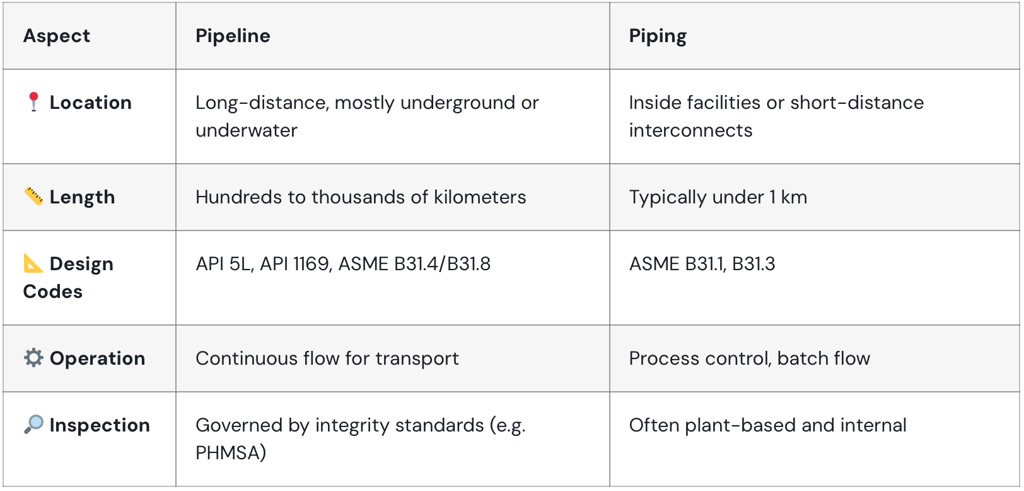
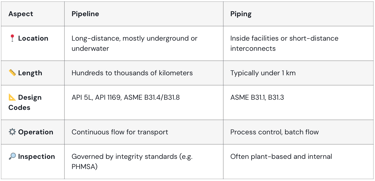
At a glance, pipeline and piping may sound interchangeable. But in engineering practice, they represent two distinct systems with different codes, purposes, and physical characteristics.
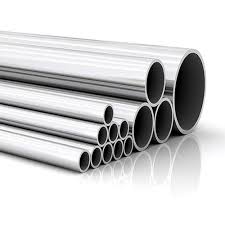
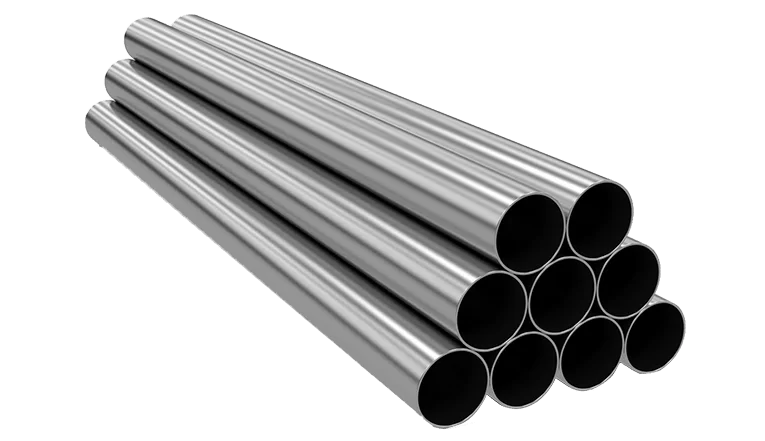
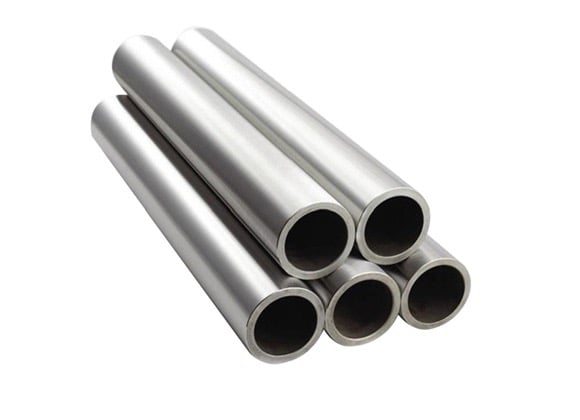
Stainless Steel
Features:
Excellent resistance to corrosion and oxidation.
Operates efficiently in high-temperature conditions.
Non-reactive with a wide range of fluids and chemicals.
Advantages:
Long-lasting and requires minimal maintenance.
Suitable for critical infrastructure like refineries and processing plants.
Common Applications:
Processing corrosive chemicals.
Offshore platforms exposed to saltwater environments.
Alloy Steel
Features:
Enhanced strength through the addition of elements like chromium and molybdenum.
High thermal resistance, ideal for extreme heat.
Advantages:
Exceptional toughness and durability under high-stress conditions.
Customizable compositions for specific needs.
Common Applications:
High-pressure pipelines.
Oil rigs and petrochemical refineries.
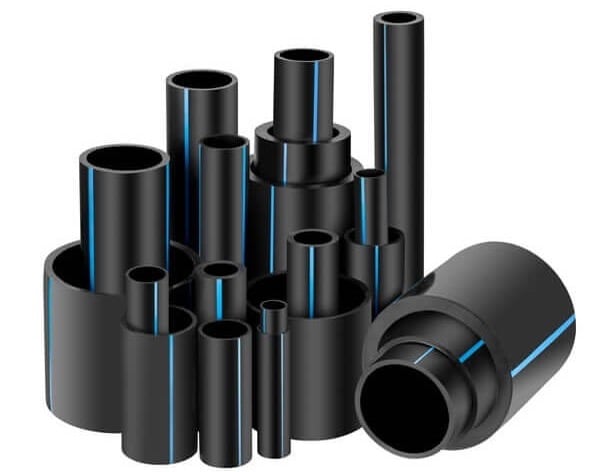
High-Density Polyethylene (HDPE)
Features:
Lightweight, flexible, and easy to install.
High resistance to corrosion and chemical exposure.
Advantages:
Low cost and adaptable for smaller-scale projects.
Capable of handling abrasive substances without degradation.
Common Applications:
Short-distance pipelines.
Wastewater management in drilling operations.
Composite Materials
Features:
Made from a blend of materials to optimize specific properties.
High strength-to-weight ratio and excellent corrosion resistance.
Advantages:
Lightweight and easier to transport compared to metal pipes.
Reduces installation time and costs.
Common Applications:
Transporting corrosive or abrasive materials.
Deepwater and subsea pipeline systems.
Copper-Nickel Alloys
Features:
High resistance to seawater corrosion and biofouling.
Good thermal conductivity for efficient heat transfer.
Advantages:
Durable and ideal for marine environments.
Anti-biofouling properties reduce maintenance costs.
Common Applications:
Offshore cooling systems.
Condensers and heat exchangers in processing plants.
Applications of Piping Materials in Oil and Gas
Upstream Operations
Carbon steel is widely used for drilling and production pipelines.
Composite materials are ideal for deepwater operations.
Midstream Operations
High-pressure pipelines transporting crude oil or natural gas typically use alloy steel.
HDPE is suitable for short-distance and temporary transport systems.
Downstream Operations
Stainless steel is prevalent in refineries due to its resistance to corrosive byproducts.
Copper-nickel alloys are essential for heat exchangers and cooling systems in processing plants.